Walk into any wine shop and you’ll probably notice one thing right away—there are shelves full of red wines and white wines. If you’re new to wine, choosing between them can feel a little overwhelming.
The good news is that the difference isn’t nearly as complicated as it seems. Once you understand how each type is made and what it generally tastes like, picking a bottle becomes much easier.
Let’s start with the basics.
It All Comes Down to the Grape Skins
Many people assume red wine is made from red grapes and white wine is made from white grapes.
That’s only part of the story.
The biggest difference actually happens during winemaking.
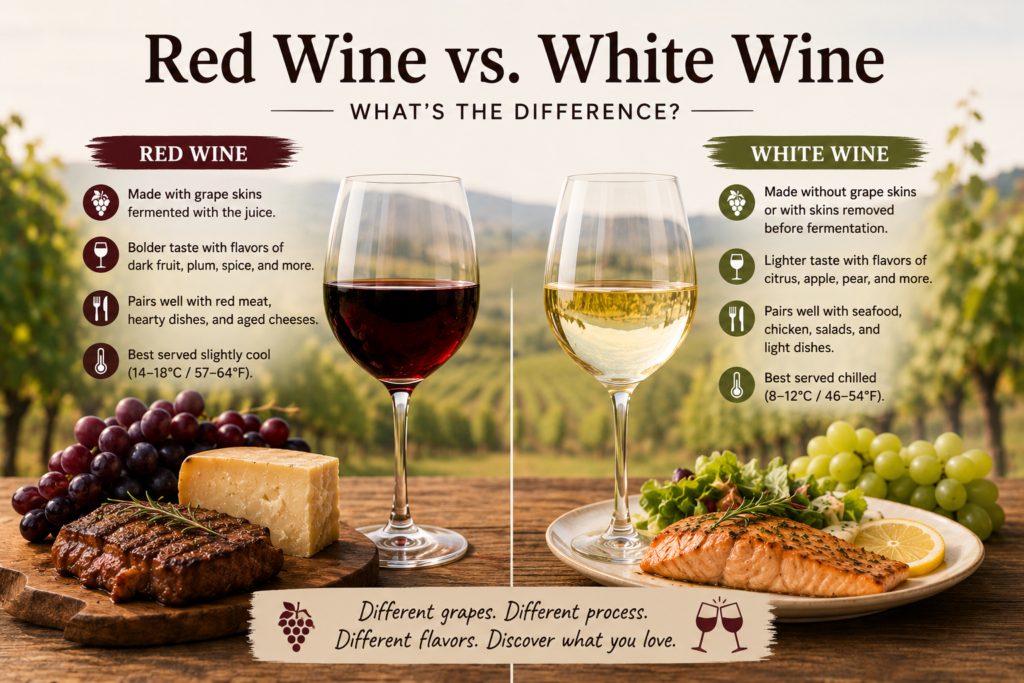
For red wine, the grape juice stays in contact with the skins while it ferments. This gives the wine its deep color, richer texture, and tannins—the compounds responsible for that slightly dry feeling in your mouth.
White wine is usually made by separating the juice from the skins before fermentation begins. Without the skins, the wine keeps a lighter color and a fresher character.
Interestingly, some white wines are even made from red grapes. As long as the skins are removed quickly enough, the juice remains almost clear.
What Do They Taste Like?
Red wines are often described as bold, rich, or full-bodied.
Depending on the grape variety, you might notice flavors of black cherry, plum, blackberry, chocolate, or even hints of spice.
White wines usually taste brighter and more refreshing. Citrus fruits, green apple, peach, pear, and tropical fruit are all common tasting notes.
Of course, every bottle is different, but these are good starting points if you’re just beginning to explore wine.
Which Foods Pair Best?
One of the reasons wine has remained popular for centuries is how well it works with food.
Red wines are often served with grilled meats, steaks, lamb, mushroom dishes, or aged cheeses. Their stronger structure stands up well to rich flavors.
White wines are a natural match for seafood, chicken, salads, creamy pasta, and lighter dishes that don’t overpower the wine.
That said, wine pairing isn’t about strict rules. If you enjoy a particular combination, that’s perfectly fine. Personal taste always matters more than tradition.
Don’t Forget the Serving Temperature
Serving temperature can make a surprising difference.
Many people leave red wine on the kitchen counter for hours, but modern homes are usually warmer than traditional wine cellars. Most reds taste better when they’re slightly cool rather than warm.
White wines, meanwhile, are best served chilled—but not ice cold. If they’re too cold, many of the aromas become difficult to notice.
A few degrees can completely change how a wine tastes.
Which One Should You Choose?
If you’re not sure where to begin, think about the kind of flavors you already enjoy.
If you like fresh, crisp drinks, white wine is often a comfortable starting point.
If you prefer richer flavors with a little more body, red wine may suit you better.
There’s no right or wrong answer. The best wine is simply the one you enjoy drinking.
Final Thoughts
Red and white wine start with the same fruit, yet they become completely different through the choices made during winemaking.
That’s part of what makes wine so interesting. Small differences in technique can lead to completely different experiences in the glass.
As you try more wines, you’ll naturally discover which styles fit your own taste.
In the next guide, we’ll take a closer look at wine sweetness levels and explain why some wines taste dry while others are noticeably sweet.