If you’ve ever enjoyed a glass of wine, you may have wondered how grapes become the drink found in your bottle. While the process has been refined over thousands of years, the basic steps remain surprisingly simple. Nature does most of the work, while winemakers carefully guide each stage to achieve the style they want.
Understanding how wine is made not only helps you appreciate what’s in your glass, but also makes choosing wine much less intimidating.
It All Starts in the Vineyard
Every bottle of wine begins with grapes. Unlike table grapes, wine grapes are smaller, sweeter, and contain more concentrated flavors. Their balance of sugar, acidity, and tannins makes them ideal for fermentation.
The timing of the harvest is one of the most important decisions a winemaker makes. Grapes picked too early may produce wines that taste overly acidic, while grapes harvested too late can result in wines that are overly sweet or high in alcohol.
Many vineyards still harvest by hand, especially for premium wines, while larger wineries often use modern harvesting machines.
Crushing the Grapes
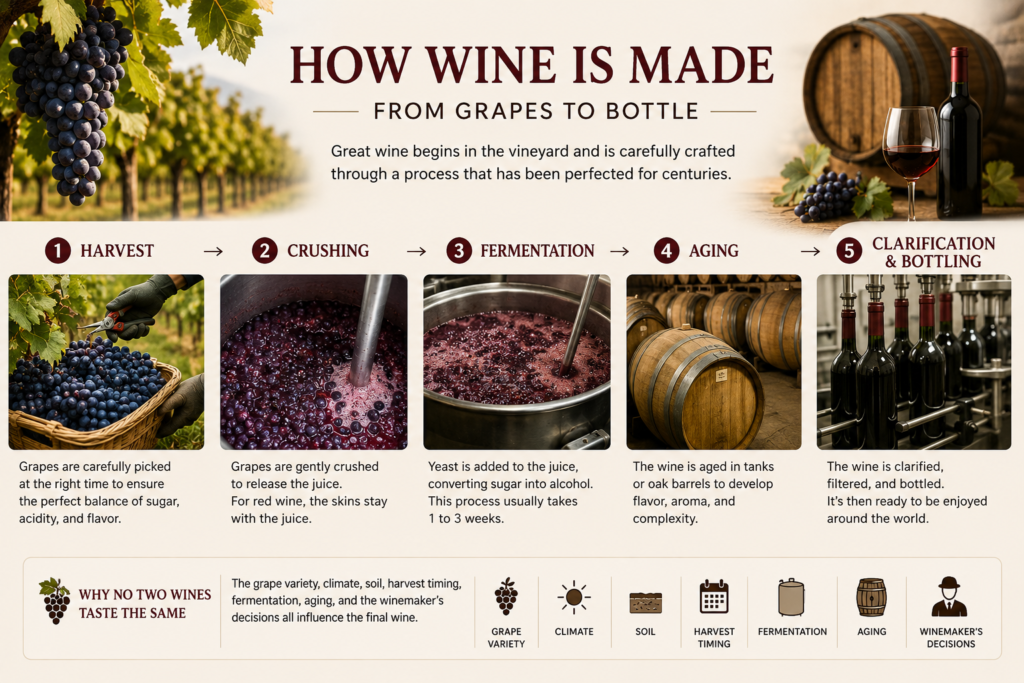
After harvesting, the grapes are taken to the winery where they are sorted and gently crushed.
For red wine, the grape skins usually remain with the juice during fermentation. This gives the wine its deep color and adds tannins and texture.
For most white wines, the skins are removed before fermentation begins, resulting in a lighter color and a fresher style.
Rosé wines fall somewhere in between. The skins stay in contact with the juice for only a short period, creating their distinctive pink color.
Fermentation: Turning Sugar Into Alcohol
Fermentation is where the transformation happens.
Natural or cultivated yeast consumes the grape’s sugar and converts it into alcohol and carbon dioxide. Depending on the type of wine being produced, this process usually takes one to three weeks.
Temperature plays an important role during fermentation. Cooler temperatures help preserve fresh fruit aromas, while warmer temperatures can create deeper flavors and richer textures.
Aging and Developing Flavor
Once fermentation is complete, some wines are bottled right away, while others spend months—or even years—aging.
Wine may be aged in stainless steel tanks to maintain bright, fresh fruit flavors, or in oak barrels to develop notes of vanilla, spice, toast, or caramel.
Not every wine benefits from long aging. Many popular white wines and light reds are made to be enjoyed while they are young and vibrant.
Clarification and Bottling
Before bottling, the wine is clarified to remove small particles that naturally remain after fermentation.
The wine is then bottled, sealed with either a natural cork or a screw cap, and stored until it’s ready to reach consumers around the world.
At this stage, the journey from vineyard to bottle is complete.
Why No Two Wines Taste the Same
Even if two wineries use the same grape variety, the final wines can taste completely different.
Several factors influence the finished product, including:
- The grape variety
- Climate and weather
- Soil conditions
- Harvest timing
- Fermentation techniques
- Aging methods
- The winemaker’s decisions
This combination of natural conditions and human craftsmanship is what makes wine so fascinating.
Final Thoughts
Making wine is both an agricultural tradition and a creative process. From the vineyard to the bottle, every step shapes the character of the finished wine.
The next time you open a bottle, you’ll know that it represents far more than fermented grapes. It reflects the land, the season, and the countless decisions made along the way.
In our next guide, we’ll explore the differences between red wine, white wine, rosé, and sparkling wine, helping you understand which style may suit your taste best.