If there’s one white wine you’ve probably heard of, it’s Chardonnay.
Walk through any wine shop, browse a restaurant menu, or look at the white wine section in a supermarket, and you’ll almost certainly find a bottle with the name Chardonnay on the label.
Its popularity isn’t a coincidence.
Chardonnay is one of the most versatile wine grapes in the world, capable of producing everything from crisp and refreshing wines to rich, creamy styles aged in oak barrels.
That’s one reason why people often discover Chardonnay long before they learn the names of other white wines.
Where Does Chardonnay Come From?
Like many famous wine grapes, Chardonnay traces its roots back to Burgundy, France.
Over the centuries, it has spread across the globe and is now grown in almost every major wine-producing country.
Some of the best-known Chardonnay regions include:
- France
- Italy
- Spain
- United States
- Australia
- New Zealand
- Chile
- South Africa
Because Chardonnay adapts well to different climates, the same grape can produce remarkably different wines depending on where it’s grown.
What Does Chardonnay Taste Like?
One of the most interesting things about Chardonnay is that there isn’t just one style.
A fresh, unoaked Chardonnay often shows flavors of:
- Green apple
- Lemon
- Pear
- White peach
- Citrus
An oaked Chardonnay usually develops richer notes such as:
- Vanilla
- Butter
- Toast
- Caramel
- Baked apple
That’s why two bottles of Chardonnay can taste surprisingly different, even though they’re made from the same grape.
Why Do Some Chardonnays Taste Buttery?
If you’ve ever heard someone describe a Chardonnay as “buttery,” they’re usually talking about wines that have gone through malolactic fermentation or have spent time aging in oak barrels.
This process softens the wine’s acidity and creates a creamier texture, making it feel richer on the palate.
Not every Chardonnay goes through this process, so don’t be surprised if one bottle tastes crisp while another feels smooth and creamy.
What Foods Pair Best with Chardonnay?
Chardonnay is incredibly food-friendly.
Depending on its style, it pairs well with:
- Grilled fish
- Roast chicken
- Creamy pasta
- Seafood
- Soft cheeses
- Roasted vegetables
Lighter Chardonnays work beautifully with fresh seafood, while fuller-bodied versions can handle richer dishes.
Is Chardonnay Good for Beginners?
Definitely.
Its approachable fruit flavors and balanced acidity make it one of the easiest white wines to enjoy.
If you’re just beginning to explore wine, Chardonnay is a great place to start because it lets you experience how different winemaking styles can change the same grape.
Many people who say they don’t like Chardonnay simply haven’t found the style that suits them yet.
Serving Tips
For the best experience:
- Serve Chardonnay at 10–12°C (50–54°F).
- Use a medium-sized white wine glass.
- If the wine has been refrigerated for several hours, let it sit for a few minutes before serving so the aromas can fully develop.
Final Thoughts
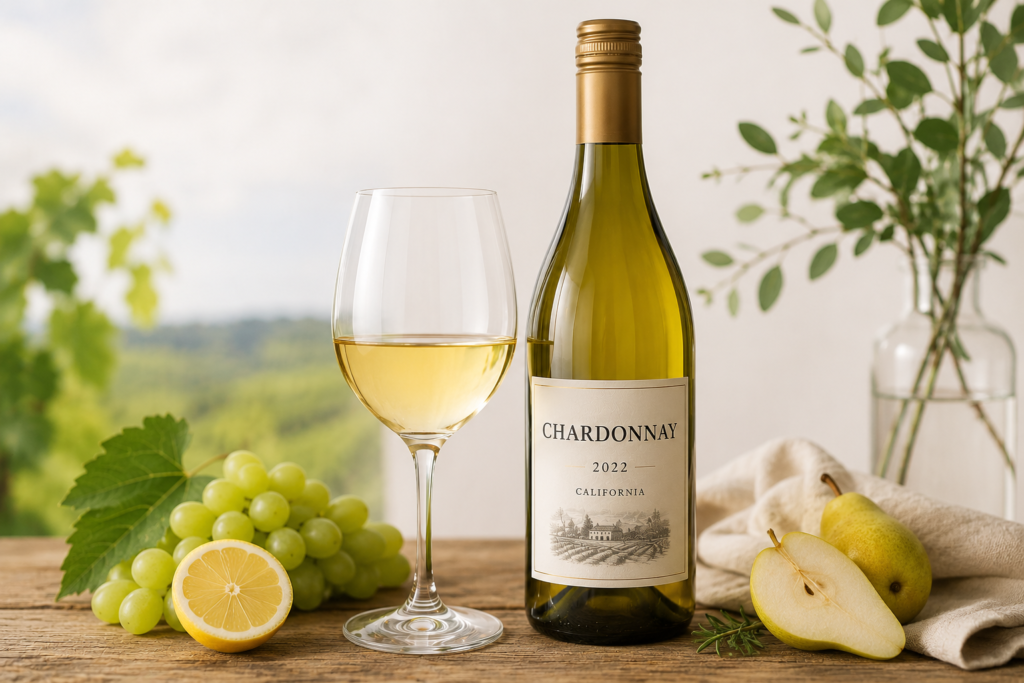
Chardonnay has earned its reputation by being remarkably adaptable.
Some bottles are bright and refreshing, while others are rich and creamy, yet they all begin with the same grape.
That’s what makes Chardonnay so fascinating.
Whether you enjoy crisp white wines or fuller-bodied styles, there’s probably a Chardonnay that matches your taste.
Next Up
Sauvignon Blanc – Fresh, Crisp, and Full of Character