If you’ve spent even a few minutes looking at wine shelves, you’ve probably come across the name Cabernet Sauvignon.
It’s one of those wines that seems to be everywhere—from supermarkets to fine dining restaurants. But what makes it so popular?
The answer isn’t just tradition. Cabernet Sauvignon has earned its reputation by offering bold flavors, remarkable aging potential, and the ability to pair with a wide variety of foods.
If you’re curious about red wine, this is one of the best places to start.
Where Did Cabernet Sauvignon Come From?
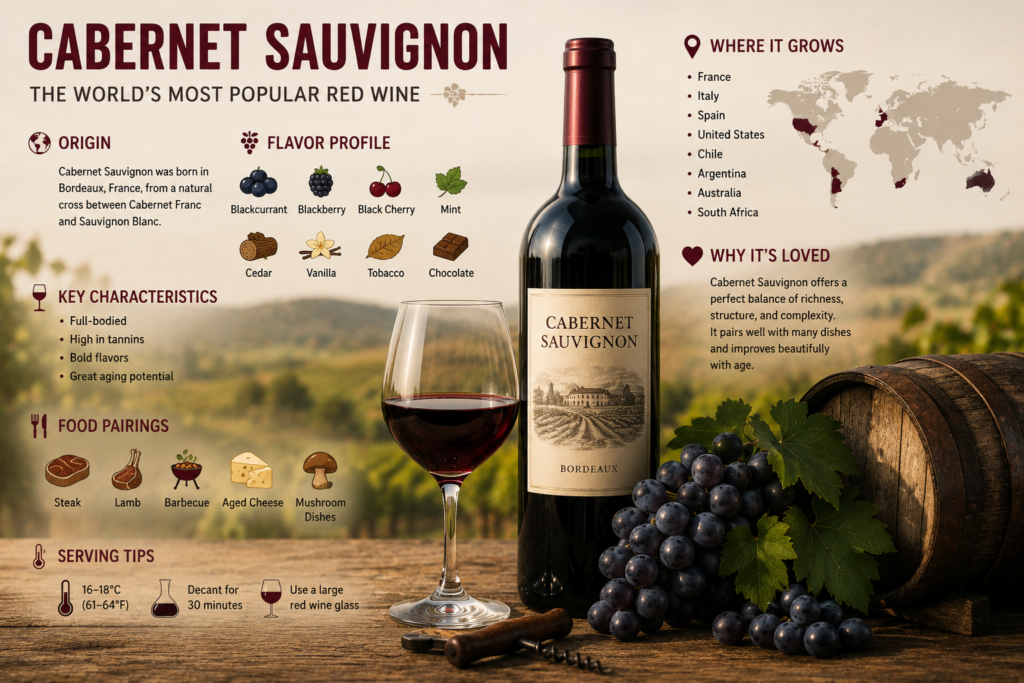
Cabernet Sauvignon was first developed in southwestern France, where it naturally resulted from a cross between Cabernet Franc and Sauvignon Blanc.
Although its roots are French, today it’s grown almost everywhere wine is produced.
You’ll find excellent Cabernet Sauvignon from:
- France
- Italy
- Spain
- United States
- Chile
- Argentina
- Australia
- South Africa
Each region gives the grape its own unique personality.
What Does It Taste Like?
Cabernet Sauvignon is known for its bold structure and deep fruit flavors.
Depending on where it’s grown, you may notice aromas of:
- Blackcurrant
- Blackberry
- Black cherry
- Plum
- Mint
- Cedar
- Vanilla
- Tobacco
Oak aging often adds notes of chocolate, coffee, or baking spices, giving the wine extra complexity.
Why Does It Feel Dry?
Many first-time drinkers notice that Cabernet Sauvignon leaves a dry sensation in the mouth.
That’s because it’s naturally high in tannins.
Tannins come mainly from grape skins and seeds, creating structure and helping the wine age beautifully over time.
If you’ve ever had strong black tea, you’ve already experienced a similar feeling.
What Foods Pair Best?
Cabernet Sauvignon shines when served with rich, flavorful dishes.
Some classic pairings include:
- Grilled steak
- Roast beef
- Lamb
- Barbecue
- Aged cheddar
- Mushroom dishes
The wine’s bold character balances beautifully with hearty meals.
Is Cabernet Sauvignon Good for Beginners?
It depends on what you enjoy.
If you usually prefer lighter drinks or sweeter flavors, Cabernet Sauvignon may seem intense at first.
However, if you enjoy coffee, dark chocolate, or grilled meat, you’ll likely appreciate its depth and complexity.
Many wine lovers discover that Cabernet Sauvignon becomes more enjoyable with each glass.
Serving Tips
For the best experience:
- Serve at 16–18°C (61–64°F).
- Let the wine breathe for about 30 minutes after opening.
- Use a large red wine glass to allow the aromas to develop.
These simple steps can noticeably improve the tasting experience.
Final Thoughts
Cabernet Sauvignon has become one of the world’s most recognized wines for good reason.
It’s bold without being overwhelming, complex without being difficult to appreciate, and widely available at almost every price point.
Whether you’re just beginning your wine journey or looking to understand why this grape is so highly regarded, Cabernet Sauvignon is a bottle worth exploring.
In our next guide, we’ll take a closer look at Merlot and see how it compares with Cabernet Sauvignon.