One of the most common questions beginners ask is surprisingly simple.
“Is this wine sweet?”
Many people assume that red wines are always dry and white wines are always sweet. In reality, sweetness has very little to do with a wine’s color.
Once you understand what makes a wine taste dry or sweet, choosing a bottle becomes much easier.
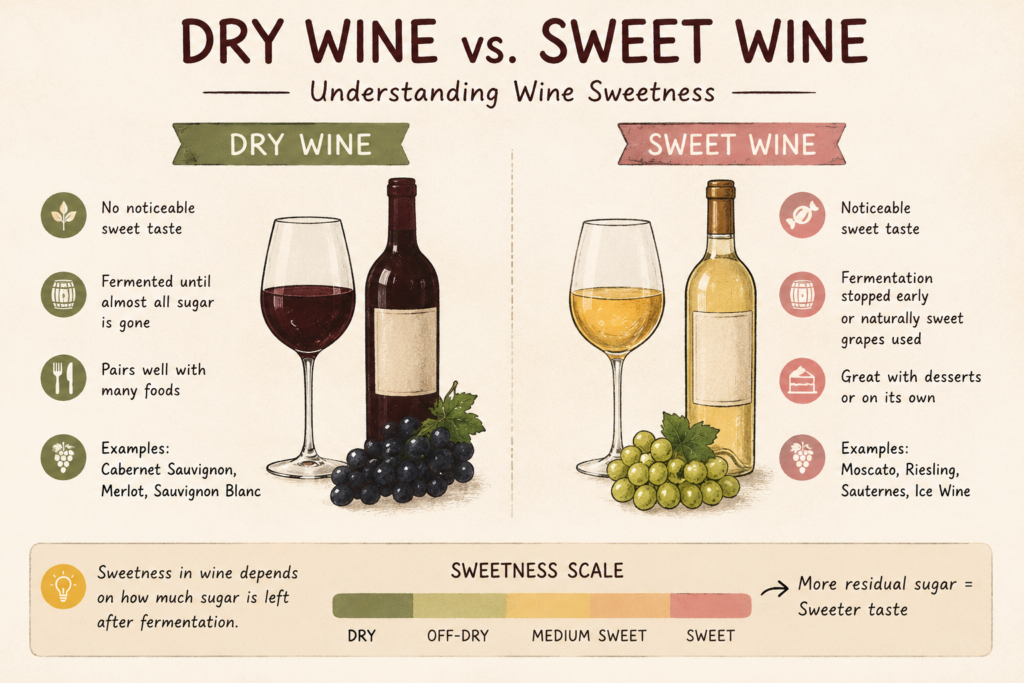
What Does “Dry” Wine Mean?
The word dry often confuses people because it doesn’t mean the wine contains less liquid.
In wine, dry simply means there is very little natural sugar left after fermentation.
During fermentation, yeast turns grape sugar into alcohol. If most of the sugar is converted, the wine tastes dry. If some sugar remains, the wine will taste sweeter.
That’s why dryness is really about how much sugar is left, not how strong the wine is.
What Makes a Wine Sweet?
Sweet wines contain more residual sugar, meaning not all of the grape’s natural sugar was converted into alcohol.
Some winemakers stop fermentation early to preserve sweetness, while others use naturally sweeter grapes or grapes harvested later in the season.
The result is a wine that feels softer, fruitier, and noticeably sweeter.
Dry Doesn’t Mean Bitter
This is one of the biggest misunderstandings among new wine drinkers.
A dry wine isn’t necessarily bitter.
Many dry wines still have rich fruit flavors such as cherry, blackberry, peach, or citrus. The difference is that these fruit flavors aren’t accompanied by noticeable sweetness.
In other words, a wine can taste fruity without tasting sweet.
Popular Dry Wines
If you’re looking for dry wines, you’ll often come across names like:
- Cabernet Sauvignon
- Merlot
- Pinot Noir
- Sauvignon Blanc
- Chardonnay (most styles)
These wines are popular because they pair well with a wide range of foods and offer balanced flavors.
Popular Sweet Wines
If you prefer sweeter wines, you might enjoy:
- Moscato
- Riesling (some styles)
- Sauternes
- Ice Wine
- Port Wine
These wines are often served as desserts or enjoyed on their own.
Which One Should Beginners Try?
There isn’t a right answer.
If you’ve never tasted wine before, a light white wine with a touch of fruitiness may feel easier to enjoy.
If you already like coffee, dark chocolate, or bold flavors, you may find dry red wines surprisingly appealing.
The best way to discover your preference is to try different styles without worrying too much about the labels.
Final Thoughts
Sweetness is one of the easiest ways to understand wine, but it’s only one piece of the puzzle.
As you taste more wines, you’ll begin to notice acidity, body, tannins, and aroma alongside sweetness.
Don’t worry about memorizing everything at once.
Wine is meant to be enjoyed, not studied like an exam.
In the next article, we’ll introduce some of the world’s most popular grape varieties and explain why each one produces such different wines.